History

  • 1867

    Founded

    An unsigned history found in the synagogue indicates that the first Jews arrived in North Adams in 1867. These first immigrants, busy with the important functions of day-to-day living, had little time to contemplate any historical significance of their actions. They left no records of their religious activities that we’ve been able to find. But we’ve discovered newspaper accounts of their High Holiday services in 1888.

    Our community’s first members adhered to the orthodox, Ashkenazic tradition that their fathers in Eastern Europe and Russia had practiced. They followed the common practice of meeting for services in private homes, and renting halls for High Holiday services.

  • 1893

    First Synagogue

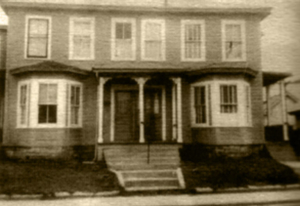
    By May 26, 1893, this small group felt itself sufficiently well established to purchase a plot of land on Francis Street from Emily P.Witt for $500. They took the name House of Israel and constructed North Adams’ first synagogue there. Early maps illustrate access to the synagogue by way of a passage from State Street labeled Synagogue Road.

    At the same time, they engaged the Reverend Simon Ratner as Cantor-Shochet. In 1895, this group established a Chevra Kadisha which has continued its work throughout the history of the community.
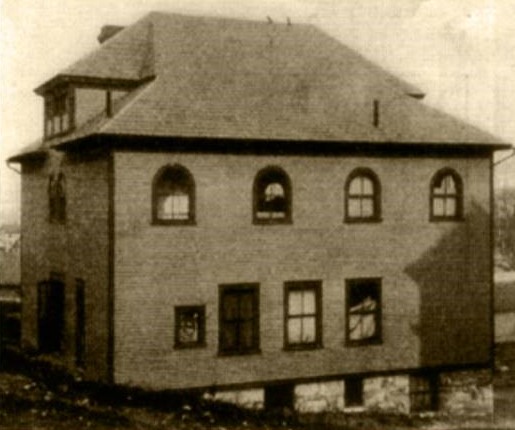
    Synagogue of the United House of Israel on Francis Street, North Adams circa 1900

    Synagogue of the United House of Israel on Francis Street, North Adams, MA. (circa 1900)

    A stunning, historic mural from this original building was re-discovered in the attic of this building, now an apartment house, in 2014. It was written about extensively in Samuel Gruber’s Jewish Art & Monuments blog. He said it “seems to merge Jewish traditional art and New England folk art” and “is a large and important surviving fragment of the visual culture of turn-of-the-20th-century immigrant Jews.”

    “The mural presents the Tablets of the Law flanked by two large colorful lions, which hold American flags in their front paws. The patriotic theme is continued higher up, where a seemingly American eagle with wings spread sits atop a tower of Jewish symbols: Decalogue, Star of David, priestly blessing hands, a wreath, and the Crown of Torah; all culminating in the eagle. The lions are entwined in tendrils. They spring forward from a stylized landscape that evoke Eretz Yisrael in its palm and cypress trees,” Gruber said. (The following photo is from his blog. Click on the image to see it in full size and to see other photos of this mural at his website.)
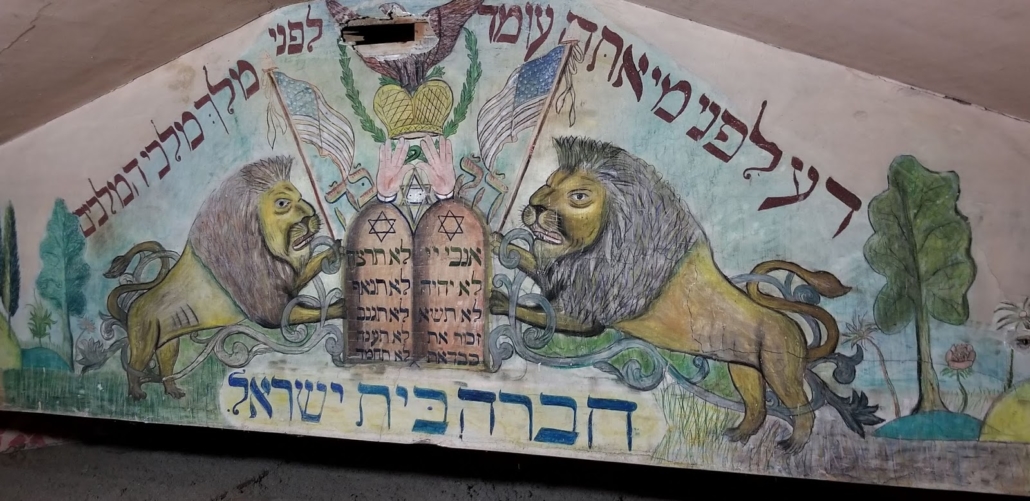

    Mural from Francis Street Synagogue

  • 1898

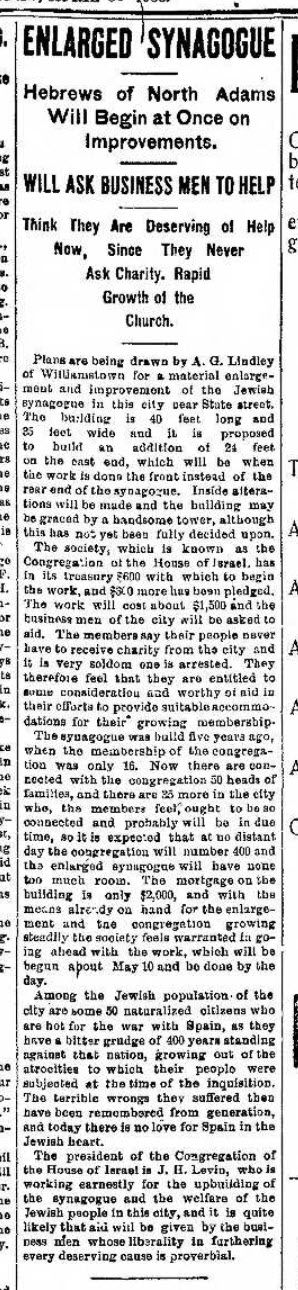
    Synagogue Enlarged

    Congregation grows from the original 16 to 50 “heads of families” in just a few years. They seek to expand the synagogue as they predict that the congregation will reach 400 families “in due time.”

    Synagogue Enlarged

    North Adams Transcript, April 30, 1898 Page 8

  • 1905

    A Second North Adams Congregation

    By 1905 a second group of Jews had come together in North Adams to establish a congregation. The congregation took the name Chevra Chai Adom and, in February 1909,represented by Hyman S. Katsch, Morris B. Hirsh, Herman Jacobs, Mark Cotton, and Morris Silverman, purchased half acre of land for use as a cemetery from Richard Hewat in Clarksburg, just north of the cemetery owned by the House of Israel. In October, this group, represented by Louis Stone, Hyman Jacobs, Robert Green, H. S. Katsch, Barnard Cotton, B. Carr, Max Wein, Louis S. Simon, and Alter Melcher, purchased a home on Ashland Street from Nelson Robare for $2800. The Congregation converted the house to a synagogue which remained in use until the early 1960s.

    Our records indicate that this smaller group relied much on its own expertise to run its programs and services; the names of only a few rabbis have come down to us. Rabbis Miller, Sirota, and Avram served this congregation as rabbi, shochet, and teacher through the 1930s. Aaron Rubin and Isaac Cohen, learned members, acted as lay leaders and instructors of boys studying for their BarMitzvah ceremonies when the Congregation was without the services of
    professional religious leadership.

    Ashland Street Synagogue

    Original Ashland Street Synagogue

  • 1920

    Bijou Theater Becomes New Synaggue

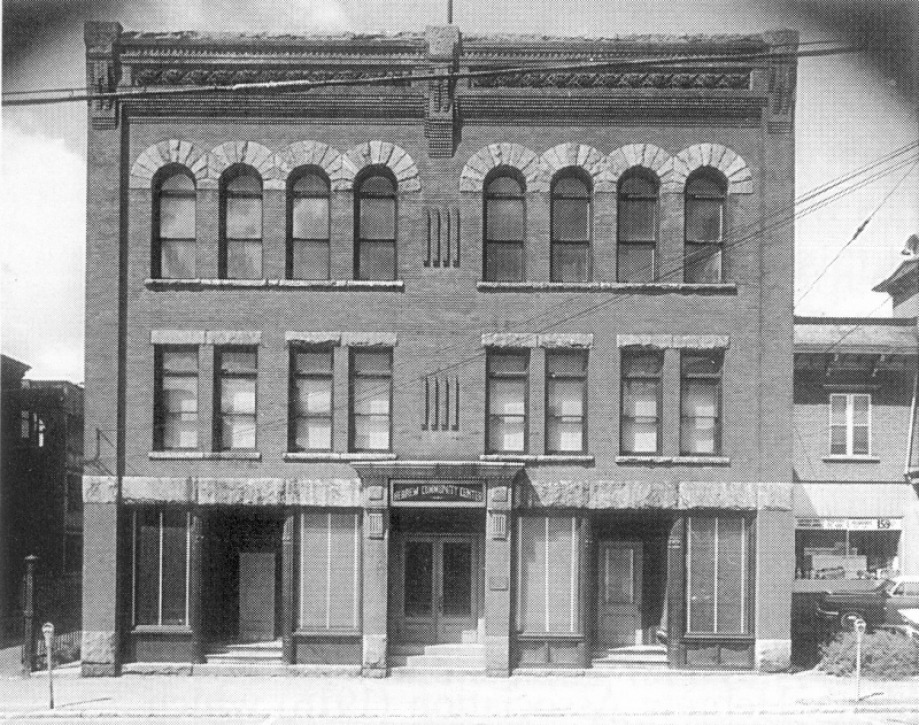
    By 1920 the House of Israel, which had been meeting in the shul they built on Francis Street, was feeling cramped. In January, meeting at the Knights of Pythias Hall, the group, under the leadership of Hymon H. Kronick, pledged $20,000 toward the purchase of a larger building. In February, they purchased the Bijou Theater on Center Street from Guglielmo Lattanzi for $25,000. The building was renovated to become a synagogue with the Daughters of Israel Aid Society contributing handsomely to this endeavor. This synagogue, variously known as the Hebrew Community Building, the Bijou, the Center Street Shul, and the Big Shul, was now available for use by the community’s many varied groups.

    United House of Israel Exterior

    United House of Israel exterior, circa 1955. (North Adams Historical Society)


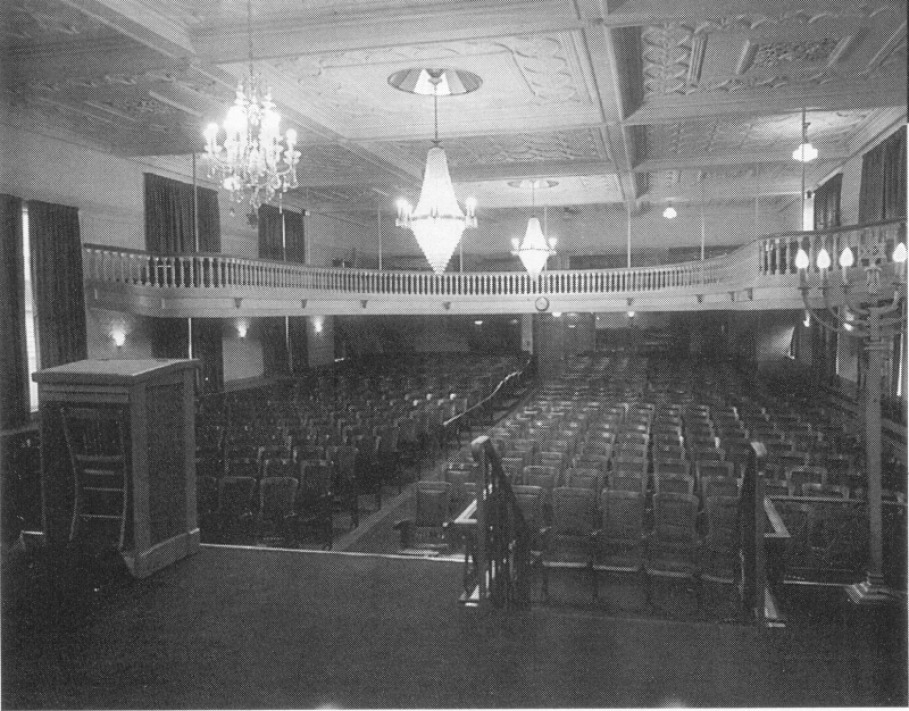
    United House of Israel interior, circa 1950

    United House of Israel interior, circa 1950. (North Adams Historical Society)

    (The building which became the Center Street synagogue had an interesting history. Originally built as a private residence, it was purchased in 1889 by the Father Matthew Total Abstinence Society. The Society expanded the building which was indicated on maps of the era as “F.M. Society.”The good father lost the property when he was unable to keep up the payments and the North Adams Savings Bank acquired the property in 1910. The property was sold to Guglielmo Lattanzi in 1911. The building was converted to the Bijou Theater and it also served as an opera house.)

  • 1920s

    United House of Israel Incorporated

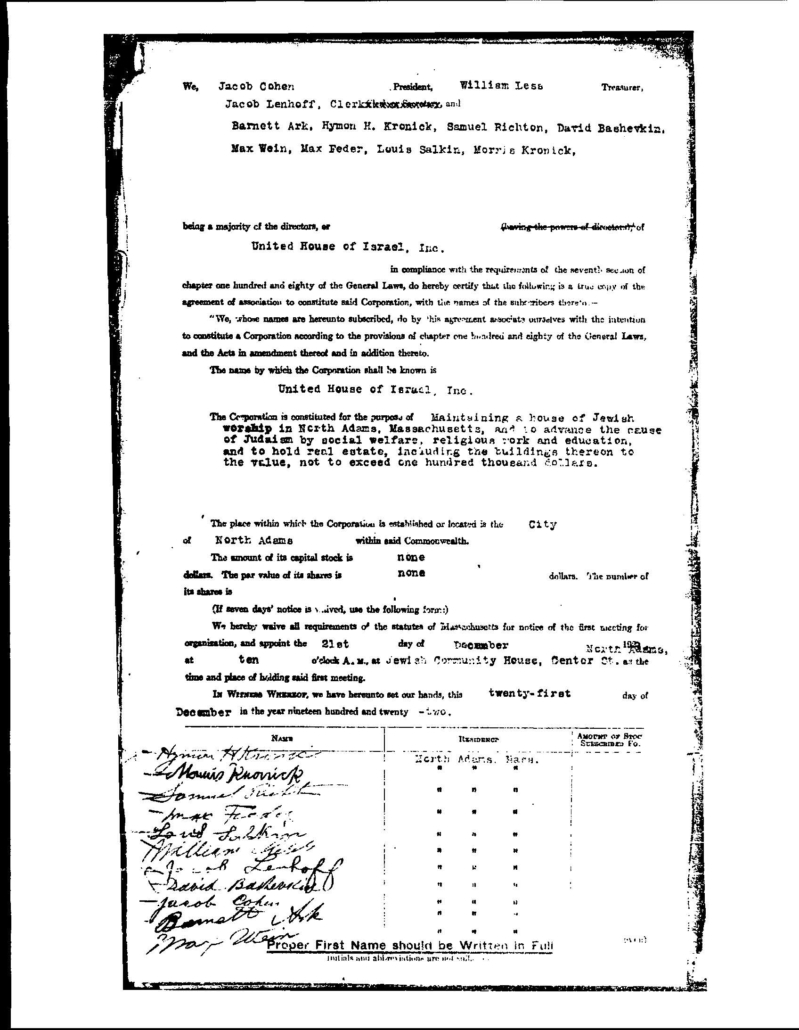
    On December 22, 1922,the group was incorporated as the United House of Israel under the presidency of Jacob Cohen and the directorship of Hymon H. Kronick, Morris Kronick, Samuel Richton, Max Feder, Louis Salkin, William Less, David Bashevkin, Barnet Ark and Jacob Lenhoff. One year later (December 27, 1923), the United House of Israel was able to burn its mortgage. One year after that (January 16, 1925),under the presidency of Barnet Ark, the United House of Israel engaged its first rabbi, Rabbi Irving Miller. Rabbi Miller remained with the Congregation for only one year; he was not replaced until 1936.

    By 1927,the organizations meeting in the Hebrew Community Building had expanded to include a Jewish Boy Scout Troop, organized by Harry Melcher, Scout Master, with Macy Kronick as Senior Patrol Leader; a Young Judea group under the auspices of Hadassah; and a Chapter of the Jewish War Veterans.

    United House of Israel Incorporation Document

    Incorporation document filed with the Secretary of the Commonwealth.

  • 1930s

    Fire

    On September 3,1931, fire destroyed much of the Hebrew Community Building. Through the generosity of Grover Bowman, Superintendent of Schools, the city of North Adams offered the Drury High School Auditorium to the United House of Israel for its High Holiday Services.

    In 1935 the Daughters of Israel Aid Society changed its name to the Ladies Auxiliary to the United House of Israel. Throughout its history, in the words of the Fiftieth Anniversary Book, “the organization has worked diligently in every endeavor both spiritually and materially for the welfare of the Community in general and the Synagogue in particular.”

  • 1947

    50th Anniversary Celebration

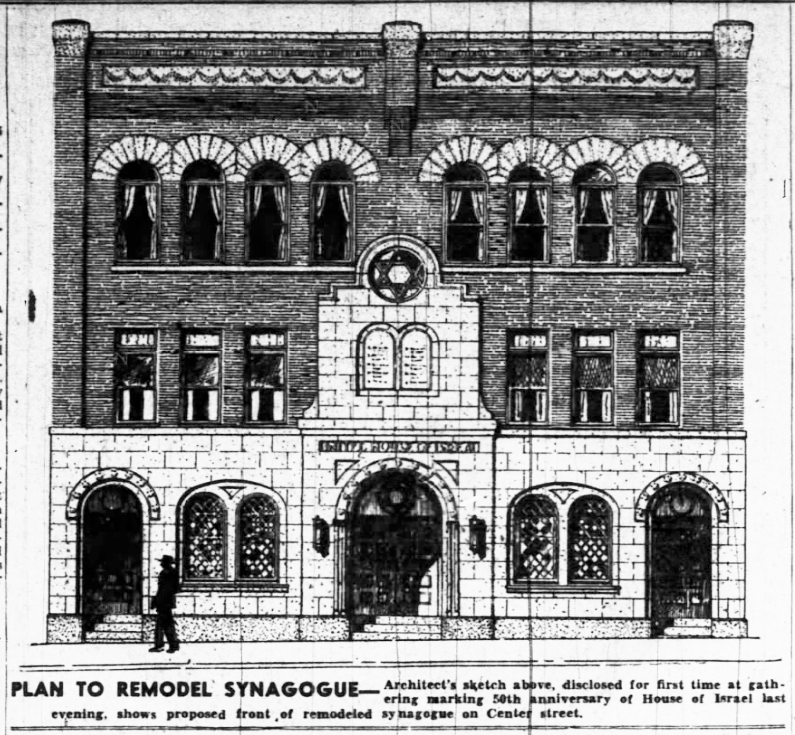
    After the end of World War II and before the establishment of the State of Israel, the thriving congregation announces plans at their 50th anniversary celebration to remodel and modernize their synagogue.

  • 1955

    Building Demolished

    The construction of a Route 2 bypass through North Adams led to the tearing down of the beautiful synagogue building. This forced the thriving congregation to move.

  • 1958

    Congregations Merge

    In July of 1958, Bernard Lenhoff, acting as counsel for Chai Adom, proposed a merger of the two North Adams Jewish congregations. This proposal was accepted at a special meeting of the United House of Israel. At the same time, President Harry Wein informed the membership that the Urban Renewal Authority had announced that the Congregation would be able to conduct its High Holiday services in the Center Street building, but that it would be necessary for them to be prepared to remove all personal belongings at the end of that period so that the building could be razed. By November of 1958, Joseph Shapiro, president of Chai Adom, was appointed to the Board of Directors of the United House of Israel. At this same time the merged organization, which adopted the name of the larger group, United House of Israel, began its regular meetings and services in its new /old home in the synagogue of Chai Adom on Ashland Street. Because space was limited in the little shul, and because the holidays fell on the weekend in 1959, the United House of Israel was able to use the Drury High School Auditorium to conduct High Holiday Services. In 1960 and 1961, the Masonic Temple was secured for this purpose.

  • 1960

    Church Street Property Purchased For New Synagogue

    From the Ashland Street synagogue, the combined group continued its search for an appropriate new home. Discussions with the City of North Adams over the suitability of offered urban renewal site locations took a lot of time. Discussions with members over other proposed sites and with architects also took much time. It was the end of May 1960 when the keys to “the Herbert B. Clark property at 265 Church Street were transferred to the Directors of the United House of Israel, signaling the conclusion of a long, arduous search. The Clark mansion was to be torn down and the new synagogue built on the site.

    The same directors’ meeting that heard the final step in the search for a new home learned of the necessity of still another new search. Rabbi Abraham Halbfinger had accepted a new position in Quebec, Canada. In October of 1960, Burton Shapiro proposed that the Congregation conduct a poll of its members to determine the feasibility of hiring a Conservative rabbi. The proposal was adopted by the board, but the results were not implemented until 1969. Additional problems arose during the following March when the general contractor for the construction of the new building announced insolvency, forcing the community to spend time investigating alternative builders. By April 1961, the directors selected a new contractor to complete the building and by June they selected Rabbi Earl Fishhaut, an Orthodox rabbi, to lead the Congregation.

  • 1961

    Congregation Beth Israel Formed

    In October of 1960, Burton Shapiro proposed that the Congregation conduct a poll of its members to determine the feasibility of hiring a Conservative rabbi. The proposal was adopted by the board, but the results were not implemented until 1969. Additional problems arose during the following March when the general contractor for the construction of the new building announced insolvency, forcing the community to spend time investigating alternative builders. By April 1961, the directors selected a new contractor to complete the building and by June they selected Rabbi Earl Fishhaut, an Orthodox rabbi, to lead the Congregation.

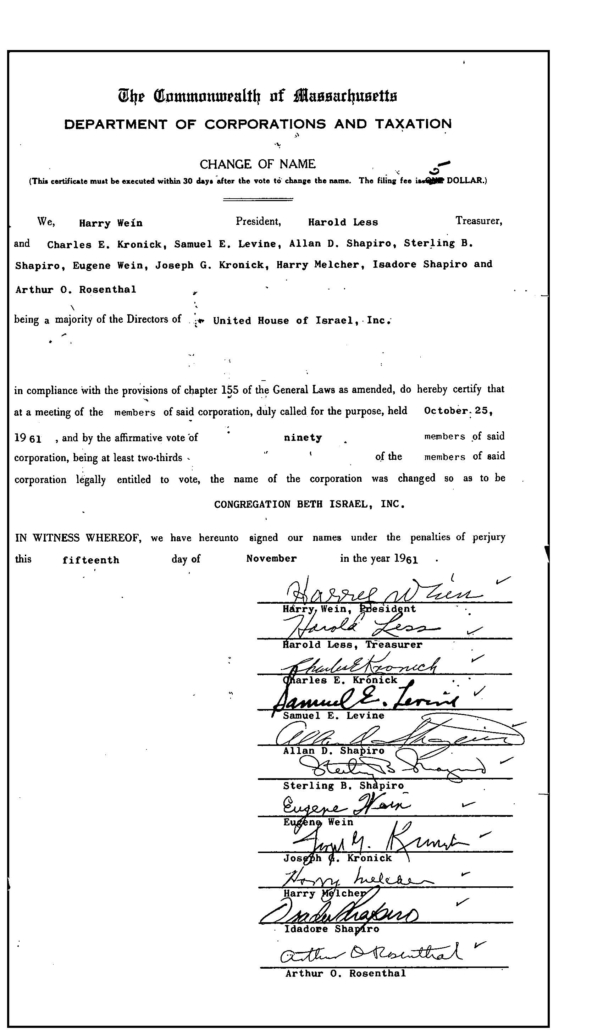
    The community was actively involved in change in many areas in the early 1960s. The president was pressing a special committee to proceed with its efforts to revise the organization’s constitution. At the same time a Sisterhood committee of Ruth (Mrs. Sterling) Shapiro and Marilyn (Mrs. Harold) Less suggested changing the name of the synagogue to Congregation Beth Israel as being more reflective of the original name. The directors agreed to recommend this change to the general body and the name change was voted unanimously at the general meeting on October 25, 1961.

    Congregation Beth Israel Name Change

    Congregation Beth Israel becomes the official name of the merged synagogues.

    As the Church Street synagogue neared completion, the Board of Directors scheduled the cornerstone laying ceremony for Sunday, October 29, 1961. The Building Committee reported that the building would be ready for occupancy by December 1961 and the Board of Directors announced that the Dedication of the new synagogue would be held on April 8, 1962.

  • 1962

    Church Street Synagogue Dedicated

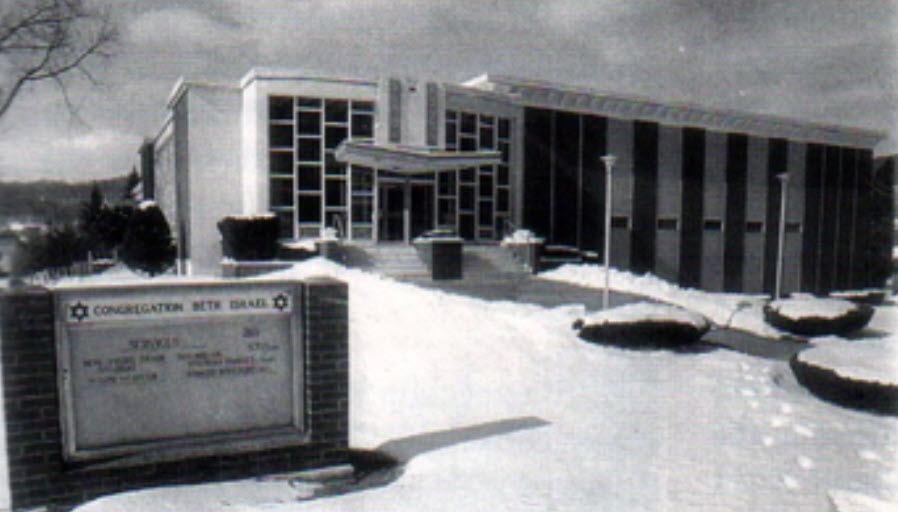
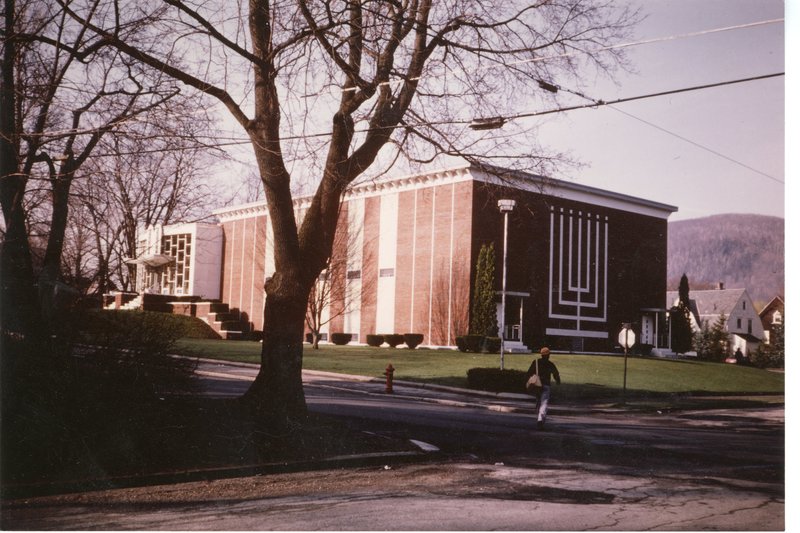
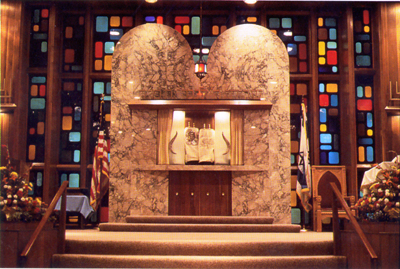
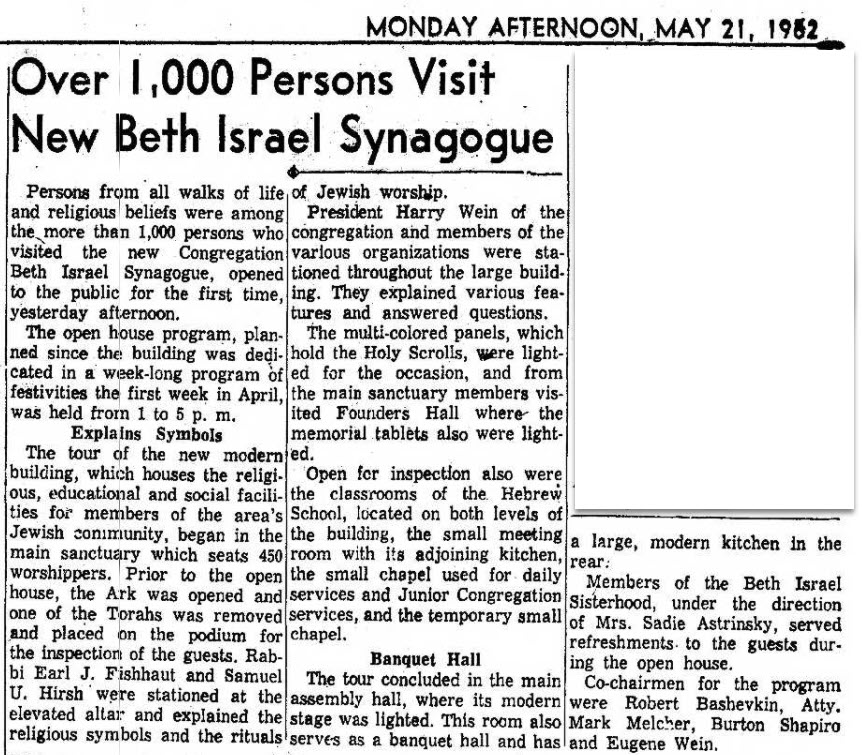
    The combined congregations move to their new, modern home on Church Street at a cost of $350,000 with seating for 450 worshippers and a banquet room for celebrations. The Arc of the Covenant is set into marble in the shape of the tablets. Multi-colored glass windows, which are artificially illuminated, surround the arc. The dedication was held April 8, 1962.

    CBI Building Church Street

    CBI Building With Menorah

    Bima Congregation Beth Israel

    Open House

  • 1969

    Conservative Rabbi Hired

    The synagogue, which was Orthodox for 80 years, responds to the changing needs of the community and hires its first Conservative rabbi.

  • 1999

    Community Evaluates Future Direction

    Disaffiliated with aspects of the Conservative movement, the Congregation underwent an extensive examination of what affiliation would serve the community best.  CBI brought in speakers from Reform, Reconstructionist, and Conservative movements.

    Rabbi Pamela Wax, our first female rabbi, led the congregation during the years of evaluation and transition. Rabbi Wax remains an active member of the CBI clergy today.

  • 2000

    CBI Joins The Reform Movement

    In response to changing community interests, Congregation Beth Israel joins the Union of American Hebrew Congregations (which is now the Union of Reform Judaism). Rabbi Jeffrey Goldwasser becomes the leader of CBI.  His warm personal style, spirituality, and commitment to social action in the interfaith community set the tone for the congregation as a place for people who cherish genuine community, the search for personal meaning, and engagement in social issues.

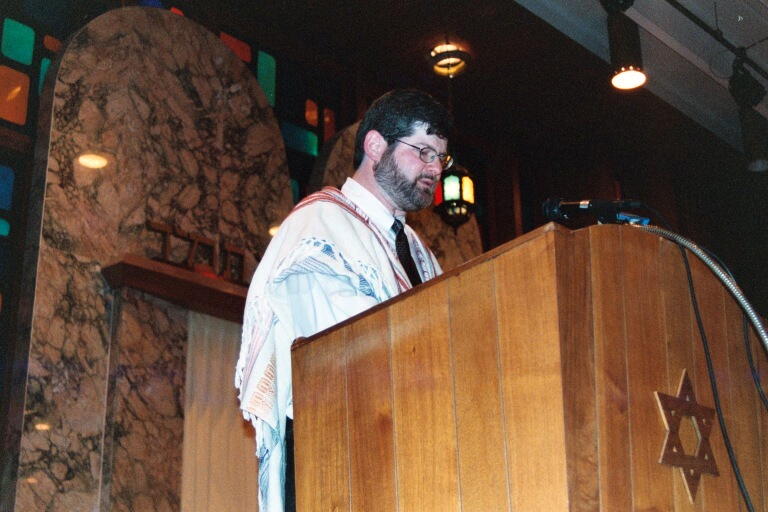
    Rabbi Jeffrey Goldwasser

    Rabbi Jeffrey Goldwasser at the bima.

  • 2003

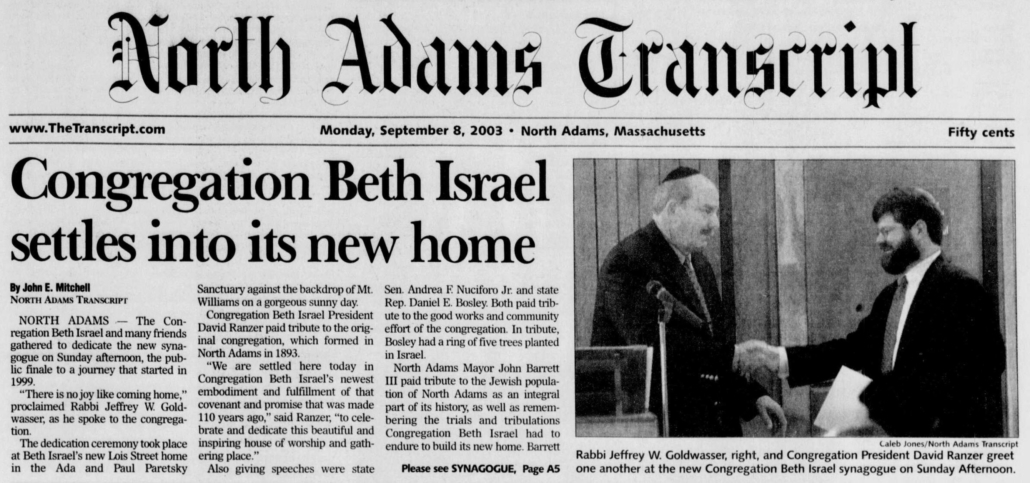
    Lois Street Synagogue Dedicated

    As the population of the Berkshires declined, Congregation Beth Israel no longer needed all the space available in the Church Street building. At the same time, the Massachusetts College of Liberal Arts (MCLA), which was located adjacent to the synagogue, needed a building with a large auditorium for lecture classes. This happy circumstance enabled CBI to build a new building in an idyllic surrounding.

    Today, Congregation Beth Israel sits in a quiet bowl at the foot of Mt. Greylock in the Berkshires. A wall of glass lines the sanctuary and opens to a tranquil mountain vista, reinforcing the connection between the building and its site. Only the Ark, which serves as both the spiritual and structural center of the building, interrupts this glass expanse to support the roof and form the focal point of the sanctuary.

    Congregation Beth Israel moves into new home

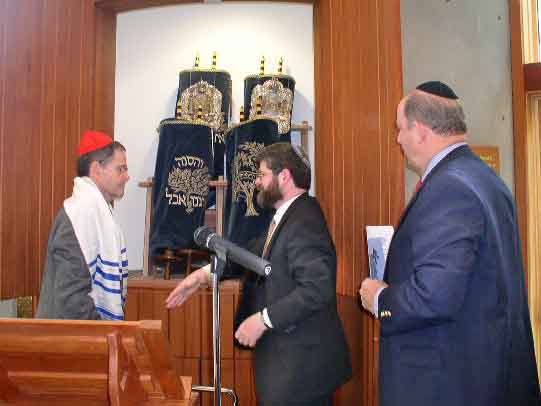
    Torah scrolls brought to new ark

    Torah scrolls brought to new Lois Street ark.

  • 2011

    Community Hires Rabbi Barenblat

    CBI hires a new spiritual leader, Rabbi Rachel Barenblat. The community continues to thrive and grow. Today we offer services in our beautiful building (when pandemic permits) and also on Zoom; we celebrate holidays around the wheel of the year; we learn and pray and care for our community; we educate our children on the premises and across our spacious outdoor grounds; we entice butterflies with our pollinator garden (in summer) and enjoy bonfires (in winter). We look forward to sustaining Jewish community in the Berkshires for many years to come.

This history is composed in part of portions of The First Hundred Years compiled and written by Carolyn Kaplan. It was published in the Congregation Beth Israel Centennial Book published in October, 1995. Other contributors include Elma Sanders and the office of Michael Rosenfeld.

List of Presidents

Presidents of House of Israel – United House of Israel – Congregation Beth Israel

1896 Morris Schiff
1897 Isaac Greenberg
1898-1899 Lois Levine
1900 Isaac Cohen
1901-1902 Max Frumkin
1903 Joseph Levine
1904 Jacob Cohen
1905 Morris Schiff
1906 Hyman S. Katz
1907 Hymon H. Kronick
1908 Isaac Hohen
1909 Morris Schiff
1910 Hyman S. Katz
1911-1912 Isaac Hohen
1913-1915 Samuel Richton
1916-1917 Hymon H. Kronick
1918-1919 Isaac Cohen
1920 Samuel Richton
1921-1922 Hymon H. Kronick
1923 Jacob M. Lenhoff
1924-1925 Barnet Arl
1926-1930 Harry Wein
1931 Max Feder
1932-1937 Harry Wein
1938-1939 Isadore Shapiro
1940-1941 Simon Kronick
1942-1945 Israel Ruby
1945-1946 Isadore Shapiro
1946-1947 Simon Kronick
1949 Harry Melcher
1950 Joseph G. Kronick
1951-1955 Harry Wein
1956 Joseph G. Kronick
1957-1962 Harry Wein
1963-1964 Eugene Wein
1965 Joseph G. Kronick
1966-1967 Benjamin Apkin
1968-1971 Albert Taskin
1971-1974 Benjamin Dolgoff
1975-1981 Burton Shapiro
1982-1986 Robert Bashevkin
1987-1990 Warner Smith
1991-1992 Mark Gold
1993-1995 Howard Wineberg
1996-1997 Bob Bashevkin, Warner Smith
1998-2003 David Ranzer
2003-2004 Hal Gordon
2004-2006 Joanne Ranzer
2006-2008 Amy Filson, Elma Sanders
2008-2009 Amy Filson, Darlene Radin
2009-2010 Darlene Radin
2010-2013 Grace Bowen
2013-2014 Pattie Lipman, Bill Levy
2014-2016 Pattie Lipman
2016-2018 Liz Miller
2018-2021 Chris Kelly
2021-2025 Natalie Matus
2025-present Natalie Matus, Wendy Penner